Licensing
How to check a security company before you sign
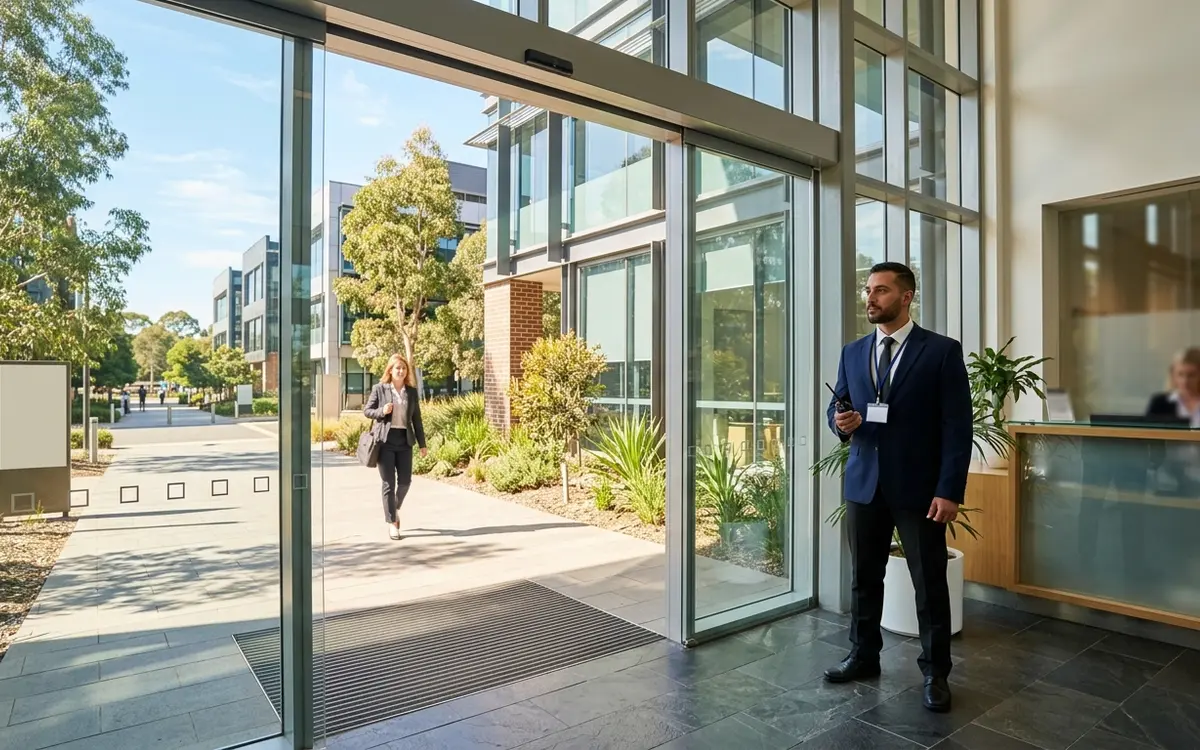
Eight checks that take an afternoon and save you from the wrong provider, from the Master licence class to a price that can actually pay the award.
By Sydney Security QuotesReviewed
The short answer
Before you sign with a security company in NSW, check eight things:
- Its Master licence is current and in a class big enough for your job
- The guards on your roster are licensed, and you know their names
- You know whether any of the work will be subcontracted, and to whom
- It can show certificates of currency for its insurance
- Its price can actually pay the award
- The quote spells out hours, rates and extras
- The contract covers post orders, reporting and notice
- It can give you references for similar jobs
Most of this takes an afternoon. The licence checks take minutes.
1. The Master licence: current, and the right class
Every business that supplies security staff in NSW needs a Master licence. Look it up on the free NSW Government register at verify.licence.nsw.gov.au by business name, licence number, ABN or ACN, and check three things:
- Status is Current. Expired, Suspended, Cancelled or Surrendered means it can't legally supply guards.
- The licence holder is the business on your quote and contract. Search by the ABN on the quote. If the licence that comes up is in a different name, ask why: a licence held by another entity isn't cover for the one invoicing you.
- The class fits the job. The class caps how many guards the business can supply on any one day, across all its clients: MA is self-employed only, MB up to 3, MC up to 14, MD up to 49 and ME unlimited. A company on an MB licence can't staff a ten guard event on its licence alone. NSW Police must first approve a Temporary Excess Provision of Services (TEPS) permit for those days, and approved permits show on the public register.
The company must also show its Master licence number in its advertising, including its website. If you can't find it, ask why. How to check a security licence walks through the register search step by step.
2. The guards: licensed, and named before the first shift
Every guard needs their own security licence, almost always class 1A Security Officer, which has covered guarding and crowd control since June 2023. Ask for the names and licence numbers of the guards rostered to your site and check them on the same register. While working, guards must wear their licence on their outer clothing, above the waist, and show it if you ask.
Where alcohol is served, anyone doing crowd control also needs an NSW RSA competency card. See which licence your job needs.
3. Who actually supplies the guards
Subcontracting between licensed companies is legal and common in security. NSW Police says both the company you book and the subcontractor need a Master licence class that covers the number of guards supplied, and the Security Industry Act bans unauthorised subcontracting.
So ask before you sign: will any of this work be subcontracted, and to which company? Get the answer in writing, with the subcontractor's name and Master licence number, and check that company on the register too.
The risk isn't subcontracting itself. It's a chain where nobody you've checked is actually responsible for the guard at your gate.
4. Insurance you can see
Ask for certificates of currency, not a line in the proposal saying "fully insured". Check the insured name matches the company, and the expiry date is after your job ends.
- Public liability. A company supplying guard dog handlers or armed guards must hold at least $10 million. For everything else, ask what it holds and whether it covers your site and activity.
- Workers compensation. Every NSW employer needs a workers compensation policy unless it's exempt, and only very small employers are. The company's guards are its employees, so injuries on your site should be covered by its policy, not yours. Ask to see the certificate.
5. A price that can pay the award
Security wages are set by the Security Services Industry Award. From 1 July 2026, a casual Level 1 guard earns $35.53 an hour on a weekday day shift and $63.95 an hour on a Sunday. Add superannuation (12%), workers compensation and payroll tax, and the employer's cost is already about $43.84 and $78.91 an hour, before uniforms, supervision, insurance, rostering and any margin.
So a quote close to those numbers can't be paying its guards properly, or isn't telling you the whole price. Underpaid guards turn over fast, and a low headline rate often comes back as extras on the invoice. What a security guard costs in Sydney covers realistic ranges, and the estimator gives you one for your hours.
6. A quote that spells it out
A good quote leaves nothing to argue about later. It should state:
- Hours and minimums: start and finish times, and the minimum shift length. Casual shifts under the award are paid for at least four hours.
- Rates by day type: weekday, night, Saturday, Sunday and public holiday rates, not one blended number
- Extras: travel, call-out, vehicle, equipment, after-hours response and late cancellation fees
- What the guard does: the duties at each post, or the checks on each patrol visit
- Reporting: what you get after each shift or visit, and how incidents are reported
7. A contract that covers the work
For ongoing work, the contract should include:
- Post orders: written instructions for each post, covering duties, access rules, who to call and what to do in an emergency
- Incident reporting: how fast you hear about an incident, and in what form
- Response commitments for patrols and alarm response, such as how long an alarm response takes to arrive
- Key and alarm code handling, if the provider holds your keys
- Term and notice: how long the contract runs and how either side ends it
8. References for similar work
Ask for two references from clients with a similar site or event, and call them. For ongoing work, a short trial period is a fair ask before a long contract.
Red flags that should end the conversation
- No Master licence number, or one that doesn't match the business invoicing you
- A licence status other than Current
- A class too small for the number of guards promised, and no TEPS permit for the extra guards
- No straight answer about subcontracting, or a plan to subcontract without your written agreement
- No certificates of currency, only "we're fully insured"
- A rate close to the award wage itself
- Cash-only payment, or no written quote
Questions
How many quotes should I get?
Two or three for most jobs. Strata schemes in NSW need at least two independent quotes for anything over $30,000.
Is the cheapest quote the best value?
Only if it can pay the award and still includes what you need. Compare quotes line by line: hours, rates by day type, extras and reporting.
What are post orders?
The written instructions for a security post: what the guard does, who they let in, who they call and what they do in an emergency. Ask the provider to draft them with you before the first shift.
Do I need a licence to hire security?
No, if you're the client paying the invoice. If you pass the cost on and act as the provider to your own client, you need a Master licence.
Sources
- NSW Police, Master licences (accessed 2026-11-15)
- NSW Police, Class 1 licences (accessed 2026-11-15)
- NSW Police, Security licensing frequently asked questions (accessed 2026-11-15)
- NSW Government, Verify a licence (security) (accessed 2026-11-15)
- Security Industry Act 1997 (NSW), s 38A, unauthorised subcontracting (accessed 2026-11-15)
- SIRA, Workers compensation exemptions (accessed 2026-11-15)
- Fair Work Ombudsman, Security Services Industry Award 2020 [MA000016], rates from 1 July 2026 (accessed 2026-11-15)
- Australian Taxation Office, Super guarantee rate (accessed 2026-11-15)
- NSW Government, Strata manager and other workers (quotes rule) (accessed 2026-11-15)
- Liquor and Gaming NSW, Competency cards (accessed 2026-11-15)
One minute to your quotation
Answer a few questions, get your number, and see what to confirm next.